
- Posted in: Blog
- By Ann Marie
Silicone is a versatile and widely used polymer, prized for its stability, flexibility, and resistance to extreme environments. Among the various types of silicone materials, Liquid Silicone Rubber (LSR) and High Consistency Rubber (HCR) are two of the most prominent, each serving unique roles in industrial, medical, and consumer applications. Understanding the differences between these two silicone types is essential for manufacturers, engineers, and designers seeking the ideal material for their projects. This blog post delves into the key distinctions between LSR and HCR silicone, examining aspects such as composition, processing, properties, typical applications, and advantages or drawbacks.
Table of Contents
- Fundamental Definitions of LSR and HCR
- Composition and Chemistry
- Processing and Manufacturing Methods
- Physical Properties and Performance
- Application Areas
- Advantages and Disadvantages
- Environmental and Regulatory Considerations
- Cost and Production Efficiency
- Choosing Between LSR and HCR
- Conclusion
Fundamental Definitions of LSR and HCR
LSR (Liquid Silicone Rubber) is a two-component, platinum-cured silicone elastomer that remains in a liquid or pourable state until mixed and cured. It is known for its ease of injection molding and high level of automation in production.
HCR (High Consistency Rubber), often referred to as heat-cured silicone rubber or “gum” silicone, is a solid, paste-like or putty-like silicone that is typically cured with either peroxide or platinum catalysts. It requires more manual handling and traditional molding techniques.
Composition and Chemistry
Base Polymer:
- LSR: Contains short-chain, low-molecular-weight siloxane polymers and is mixed with catalyst and crosslinker components just prior to molding.
- HCR: Consists of long-chain, high-molecular-weight siloxane polymers, resulting in a doughy consistency that can be milled and shaped.
Curing System:
- LSR: Always platinum-catalyzed (addition cure), resulting in rapid, controllable cure times and minimal byproducts.
- HCR: Can use either peroxide (free radical) or platinum (addition) catalysts. Peroxide curing produces byproducts that may need post-curing to remove, while platinum curing is cleaner but more expensive.
- Additives: Both LSR and HCR can be formulated with various additives, such as pigments, flame retardants, and reinforcing fillers, but their processing affects how these additives are incorporated.
Processing and Manufacturing Methods
LSR Processing
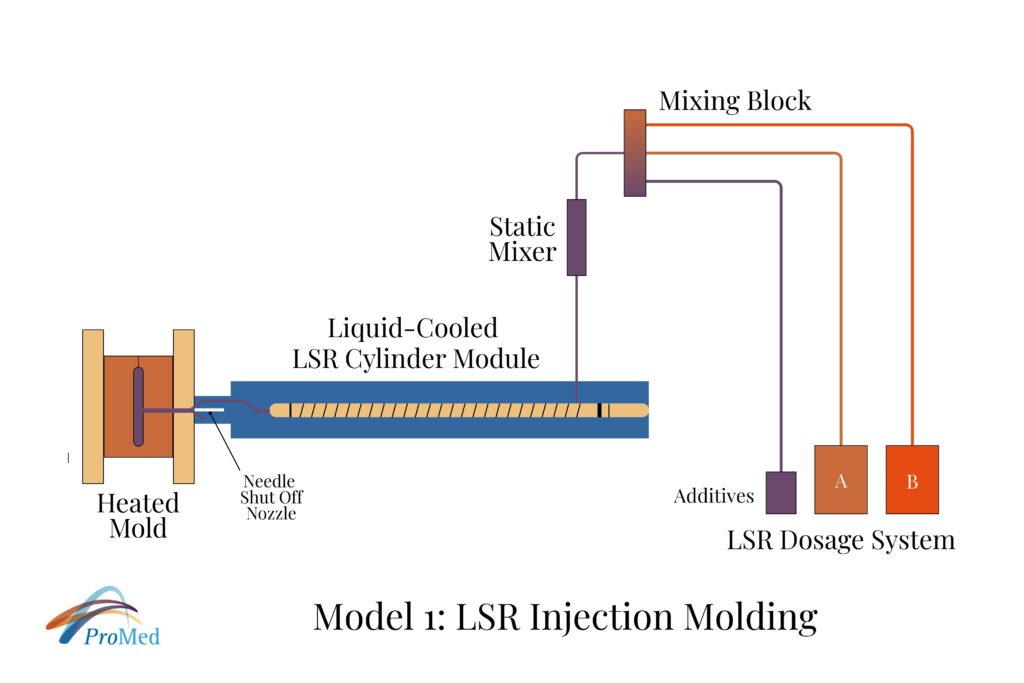
LSR is typically processed using injection molding, which is highly automated. The two liquid components are metered, mixed, and injected into a heated mold. The material cures rapidly within the mold, and parts can be ejected quickly, allowing for high-volume and consistent manufacturing.
- LSR processing is ideal for complex, precise, and small-to-medium parts, with cycle times often under a minute.
- LSR materials are delivered in sealed drums or cartridges, minimizing contamination and enabling cleanroom compatibility.
LSR Injection Molding
HCR Processing
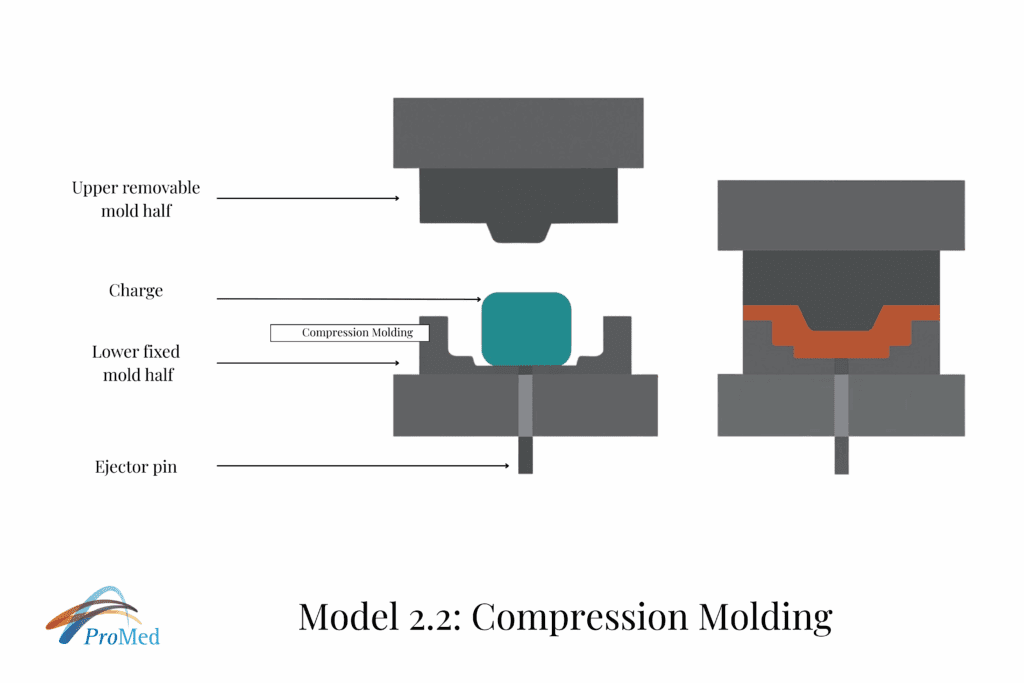
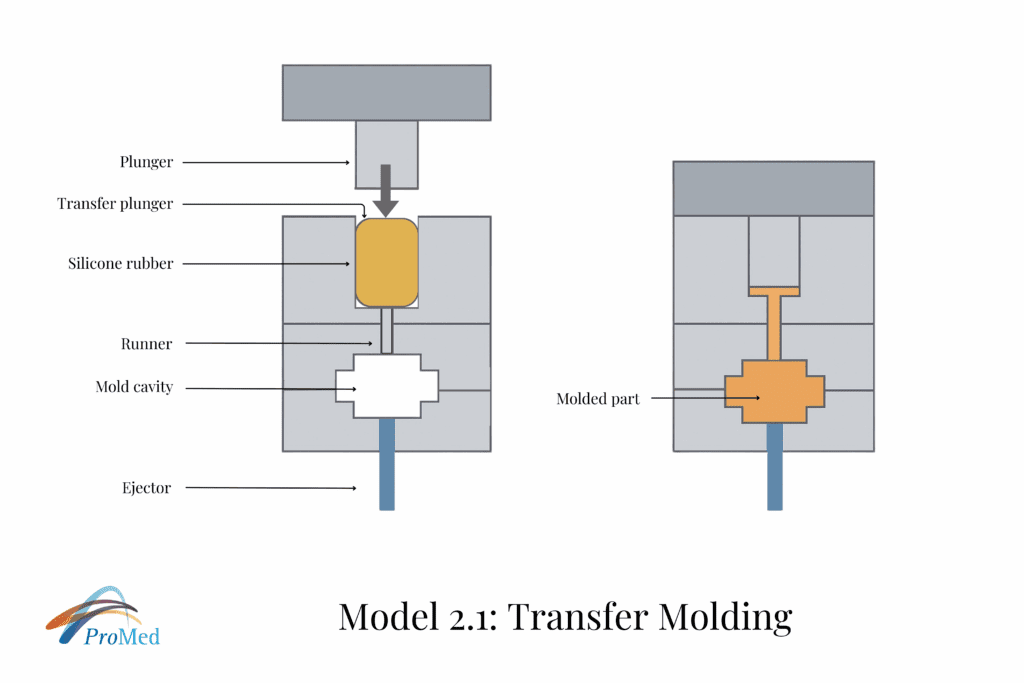
- HCR is typically processed using compression, transfer, or extrusion molding. The raw gum rubber is blended with additives and curing agents using a two-roll mill, then shaped and cured under heat and pressure.
- HCR may require additional post-curing in an oven to remove volatile byproducts, improve mechanical properties, or meet regulatory requirements, especially if peroxide cured.
- HCR processing is more manual, making it flexible for custom or large parts, but less suited to high-speed automation.
Compression Molding
Transfer Molding
Physical Properties and Performance
Mechanical Properties:
- LSR: Generally exhibits lower durometer (softer), higher flexibility, and excellent tear resistance. Ideal for delicate or intricate designs.
- HCR: Tends to offer higher durometer (harder), greater tensile strength, and durability. Preferred for demanding, robust applications.
Thermal Stability:
- Both LSR and HCR maintain performance across a broad temperature range (-55°C to +200°C, with special grades going higher), but HCR may have a higher thermal capacity due to its denser network.
Application Areas
LSR Applications:
- Medical devices (catheters, seals, valves, silicone tubing)
- Baby products (nipples, pacifiers, bottle seals)
- Consumer electronics (keypads, gaskets, wearables)
- Automotive components (grommets, connectors, LED lenses)
- General industrial seals and O-rings requiring high precision
HCR Applications:
- Electrical insulators and cables for power transmission
- Extruded profiles for construction, aerospace, and automotive sectors
- Large-format molded goods (rollers, sheets, membranes)
- Compression- or transfer-molded gaskets and seals
- Applications needing enhanced mechanical strength or custom shapes
Advantages and Disadvantages
LSR Silicone
- Advantages: High precision and repeatability, rapid cycle times, excellent purity and biocompatibility, superior for automation, minimal contamination risk.
- Disadvantages: Higher initial investment in equipment, less flexibility for large or custom parts, raw material cost can be higher.
HCR Silicone
- Advantages: Flexible for different molding and extrusion methods, excellent mechanical strength, suitable for custom and large parts, generally lower raw material cost.
- Disadvantages: More labor-intensive processing, longer cycle times, may require post-curing, potential for material inconsistency if not processed carefully.
Environmental and Regulatory Considerations
Both LSR and HCR are considered environmentally stable and chemically inert. However, LSR’s closed-system injection molding minimizes the risk of contamination, making it favored in sensitive, regulated industries like healthcare and food. HCR, especially when peroxide-cured, may produce byproducts that require careful handling and disposal.
Cost and Production Efficiency
- LSR: Higher up-front investment in equipment and setup, but can dramatically reduce per-part cost at high volumes due to automation and fast cycle times.
- HCR: Lower initial equipment costs, ideal for short runs, large or custom parts, but higher labor and longer cycle times reduce efficiency for mass production.
Choosing Between LSR and HCR
The choice between LSR and HCR depends on several factors:
- Part size and geometry: LSR excels at small, complex shapes; HCR at large or custom-shaped parts.
- Regulatory and purity requirements: LSR is preferred for medical, food, or baby products due to its cleanliness.
- Mechanical demands: HCR provides greater strength and resilience for demanding environments.
- Budget and equipment: LSR requires higher initial investment but offers long-term efficiency; HCR suits existing, traditional molding setups.
Conclusion
In summary, Liquid Silicone Rubber (LSR) and High Consistency Rubber (HCR) silicone each offer distinct advantages and are tailored to different production needs. LSR’s liquid state, platinum curing, rapid automation, and purity make it the material of choice for high-volume, precision applications where strict hygiene is required. HCR, with its solid form, flexibility in processing, and robustness, remains indispensable for large, custom, or mechanically demanding parts. Understanding the nuanced differences between LSR and HCR allows manufacturers and designers to select the ideal silicone material for innovation, functionality, and efficiency in their products.